
By Proud Sigauke (Marketing and Communications Officer at ZNFPC Mash Central)
Sustainable development is a phased process that is anchored by several initiatives promoted at different levels such as community levels. It is not a standalone, independently pursued and a one-time event, rather is a non-structured concept that seeks to improve people’s welfare in all dimensions of development (social, political, economic and technological). This United Nations flagged global development blueprint is set to spark the core elements of development through the implementation of the 17 sustainable developments, the special ingredients which simmer the development process.
Several guiding principles and approaches to sustainable development have been developed by different countries in a bid to spark this life-changing concept. In Zimbabwe, the National development Strategy 1 (2021 – 2025) and 2 (2026 – 2030) have been implemented with a focus on industrialization, innovation and technology development and improved healthcare service delivery across the country. In the healthcare sector, the National Health Strategy has been promoted to ensure that the general populace have quality access to healthcare services not limited to family planning, sexual and reproductive health. The drive has called for the multisectoral approach, inviting different partner agencies and health institutions to implement the National Health strategy through programme implementation in different health aspects such as family planning, HIV and AIDS programming, maternal and childcare just to mention a few, which directly feeds into the national development strategy and United Nations Goal 3 of ensuring better health and wellbeing for all.
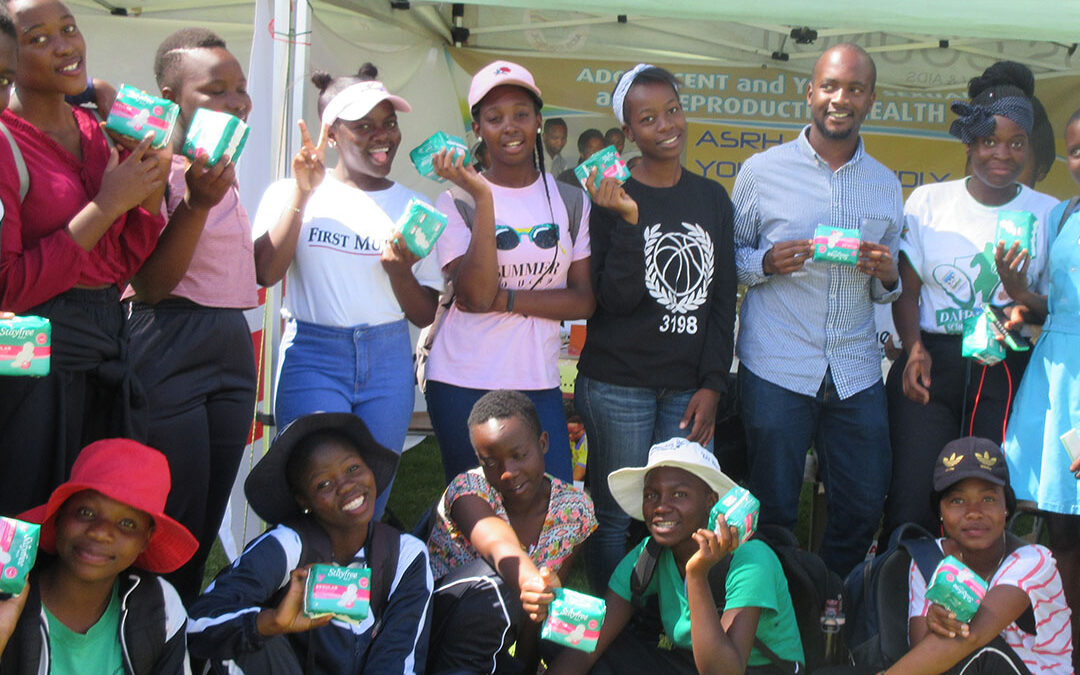
As one of the leading government parastatals, the Zimbabwe National Family Planning Council (ZNFPC) in Mashonaland Central province together with the Ministry of Women Affairs, Community, Small and Medium Enterprise Development recently joined hands in advancing the national health strategy through a resilient and sustainable health system especially on promoting sexual and reproductive health among adolescents. The drive had put the sexual and reproductive health concept into motion, through the training and capacity building of young people of Madziwa and Shamva through ZNFPC Madziwa Youth Friendly Centre and Shamva Youth Friendly Centre respectively, on re-usable sanitary pads, with the aim of fighting period poverty in rural communities. The training has capacitated male and female adolescents and young married mothers on the practical skills to produce re-usable sanitary pads. A kind of long-lasting menstrual health product, to ensure that no adolescents in school will miss school due to shortage and scarce access to menstrual health products and empowering young women in the rural communities of Shamva and Madziwa in Mashonaland Central province.
The training has given young people relevant skills and information they need in producing re-usable sanitary pads, which allows rural people to utilize them repeatedly, posing a significant advantage over the one-time disposable sanitary pads sold in retail shops, which are not accessible due to financial constraints given the economic background of rural communities across the province. Such hands-on training has passed on the button stick of sustainability in the production of re-usable sanitary pads which helps community members to address and reduce period-poverty, giving young girls and women power to act upon their menstrual health and hygiene.
One of the trainers Tsitsi shared, “These form of sanitary pads allow us to use them over and over again and one thing I like about them is that they are free from chemicals which can sometimes affect us through yeast infections and other vaginal discomforts which comes with these disposable sanitary pads we buy from stores” This sustainability driven collaboration is key in addressing the period-poverty which young girls and women face and helps to cement the gap in terms of skills development needed to spark sustainability in the rural communities of Zimbabwe.