
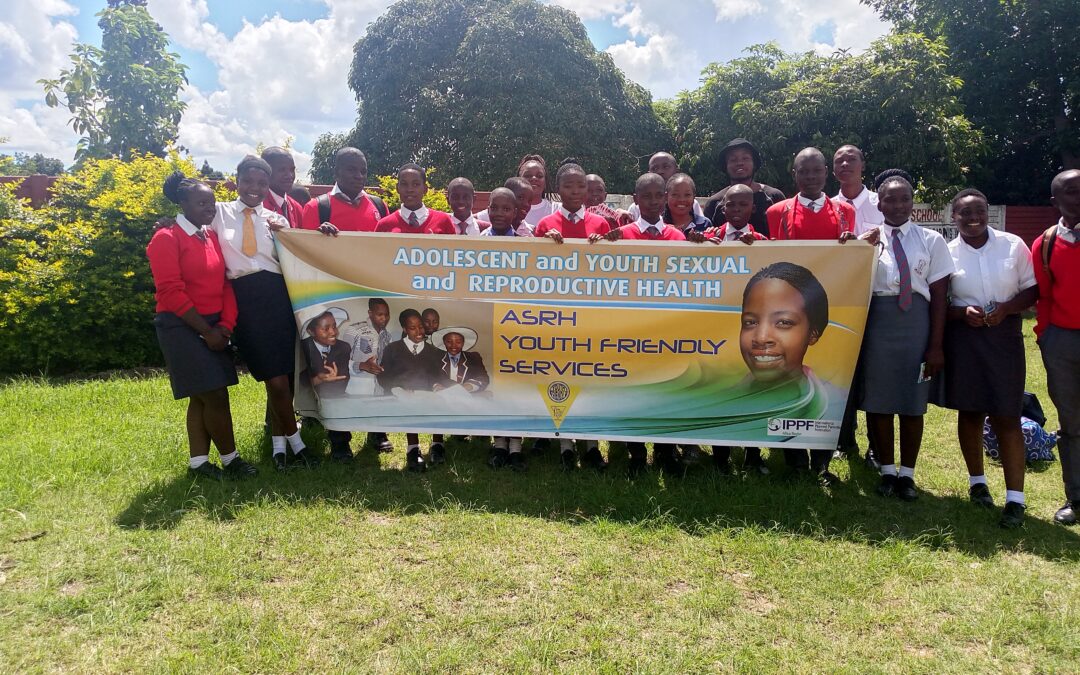
By Miss Ruvarashe Charakupa – ZNFPC Student intern studying Bsc Social Work at Bindura University of Science Education. In many communities around the world, girls grow up without adequate knowledge about their bodies, their reproductive rights, or access to contraception. This lack of empowerment severely limits their ability to make informed choices, affecting not only their health and education but also their future opportunities. As a social worker, l have seen how transformative it can be when girls are given the tools, information and freedom to make their own reproductive decisions. Empowering girls with contraception knowledge and choices is essential in building a healthier and equal society, for individuals, families and nations as a whole.
The primary group that needs empowerment in this context is adolescent girls and young women, especially those in low-income, rural, or marginalized communities. Often, these girls lack access to basic reproductive health information due to cultural taboos, lack of education, or inaccessible healthcare systems. They are frequently left out of conversations about their own health and are the most vulnerable to early pregnancies, forced marriages and school dropouts.
However, the responsibility for empowerment does not rest solely with girls. Parents, educators, health providers, policymakers and community leaders all have critical roles to play. By creating supportive environments where girls can access contraception knowledge and services safely and confidently, these stakeholders help shift the broader societal norms that restrict female autonomy.
Empowerment, in this context, means giving girls the knowledge, resources and freedom to make decisions about their reproductive health. This includes understanding how contraception works, what their rights are, and how to access services without fear or shame. It also means ensuring that girls are free to make choices about if and when they want to have children, without pressure from partners, families or society.
Importantly, contraception empowerment does not mean promoting promiscuity, as some critics fear. Rather, it is about equipping young women with life skills and the ability to plan their futures. When girls are informed and supported, they are better able to complete their education, pursue careers and build healthy families on their own terms.
The benefits of empowering girls with contraception knowledge and choices are far-reaching as it improves health outcomes. This is so because, girls who understand and use contraception properly can avoid unintended pregnancies, unsafe abortions and complications from early childbirth. This significantly reduces maternal and infant mortality rates.
Another benefit of empowering girls with contraception knowledge and choices is that, it enhance educational and economic advancement. Early and unplanned pregnancies are a leading cause of school dropouts among girls. When girls are able to delay motherhood, they are more likely to finish school, pursue higher education and gain employment, contributing to both their personal growth and national economies.
In addition, empowering girls with contraception knowledge and choices reduces poverty and gender inequality. This is so because, it builds stronger communities and societies. Thus, when girls thrive, communities become more resilient and equitable. Reducing the burden of early motherhood and increasing participation in education and the workplace contributes to more stable and prosperous societies.
There are several practical steps that can be taken to ensure that girls have the knowledge and freedom to make informed reproductive choices. These may include, comprehensive sexuality education, community engagement, raising awareness campaigns, policy and legal reforms as well as empowering peer education and leadership.