

By Percival Kushure (Marketing and Communications Officer) – Mash central
‘Customer is King’, is a commonly used phrase in the business circles with reference to how a customer should be treated. It emphasizes the importance of customer satisfaction and service. The proponents of customer care approaches have since realized that customer satisfaction is key to achieving high sales. When customers are treated with respect and dignity and when they enter a hospitable shopping space, they feel special. The desire at the end of the day is to increase sales of products and services.
However, when it comes to family planning service provision, there is more to the connotation behind the phrase: ‘Customer is King’, which refers to the good treatment of customers. A rights-based approach becomes cardinal, and it carries more weight than the phrase, ‘customer is king’ in family planning service provision. Rights based approach is not just about offering family planning contraceptives and other reproductive health services with the aim of reaching more clients as it were, but it is about how they are offered.
It is a way of providing integrated family planning, reproductive health and HIV / AIDS information and services in a way that respects, protects and fulfills human rights, which include the rights to health, life, equality, non-discrimination, autonomy, information, privacy, participation and accountability. These important aspects form the key characteristics, which ensures a rights-based approach to service delivery. In this context, service is not number oriented, but people oriented where human rights are the cornerstone of service and product provision.
These key characteristics are essential in-service provision, programme interventions and facilities used to provide services and they are based on the following fundamentals:
Acceptability and Quality: Individuals have the right to choose a contraceptive method that suits their needs and preferences.
Non-discrimination and equity: Clients have the right to be treated fairly, without discrimination based on who they are or their circumstances.
Informed Choice: Those who seek family planning services have the right to decide whether to use family planning and what method to choose, based upon accurate and complete information including side effects of each family planning method.
Privacy and Confidentiality: Most people desire to receive services in privacy. It is their right to receive information and services in a setting where no one can hear or observe their interactions with the service provider and to have their records or information be shared with anyone.
Participation and Accountability: Individuals, have the right to provide input into how the services are offered for them, through suggestion boxes and through arranged community engagements.
Accessibility ensures that services and supplies are available, affordable, and within reach for everyone especially the marginalized and under-served populations.
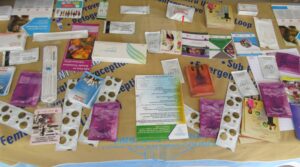
As such, the Zimbabwe National Family Planning Council in Mashonaland Central Province, as in other provinces, provide a rights-based approach to their clients who receive services at its static clinics. The clinics are accessible to all individuals regardless of their race, ethnic backgrounds. Provision for persons with disability to access the clinics have been made, wheelchair ramps have been built to accommodate those on wheelchairs, some members of staff have been trained on basic sign language to communicate better with individuals with hearing impairment. Information education and communication materials for those with visual impairment is available in braille.
Speaking at a rights-based training workshop for the District and Provincial Health Executives under the Ministry of Health and Child Care held at Mazowe Hotel recently, the Director Technical Services for ZNFPC Ms. M. Marimirofa remarked that, “Family Planning service provision should always be rights based and clients should be well informed to make choices.”
The provincial Medical Director Dr. C. Chuma also stated that, “Rights-based approach helps to avert and address the gap in maternal and infant mortality. There is need to avail resources, which include equipment for deliveries and to educate the communities about rights to ensure reduced incidences of child marriages and unintended pregnancies.”